Interview notes in, a research synthesis deck out.
Send the interview notes and the numbers behind them. FrameBind finds the drivers, keeps the customers' own words as evidence, and builds a synthesis deck you can take to an executive offsite.
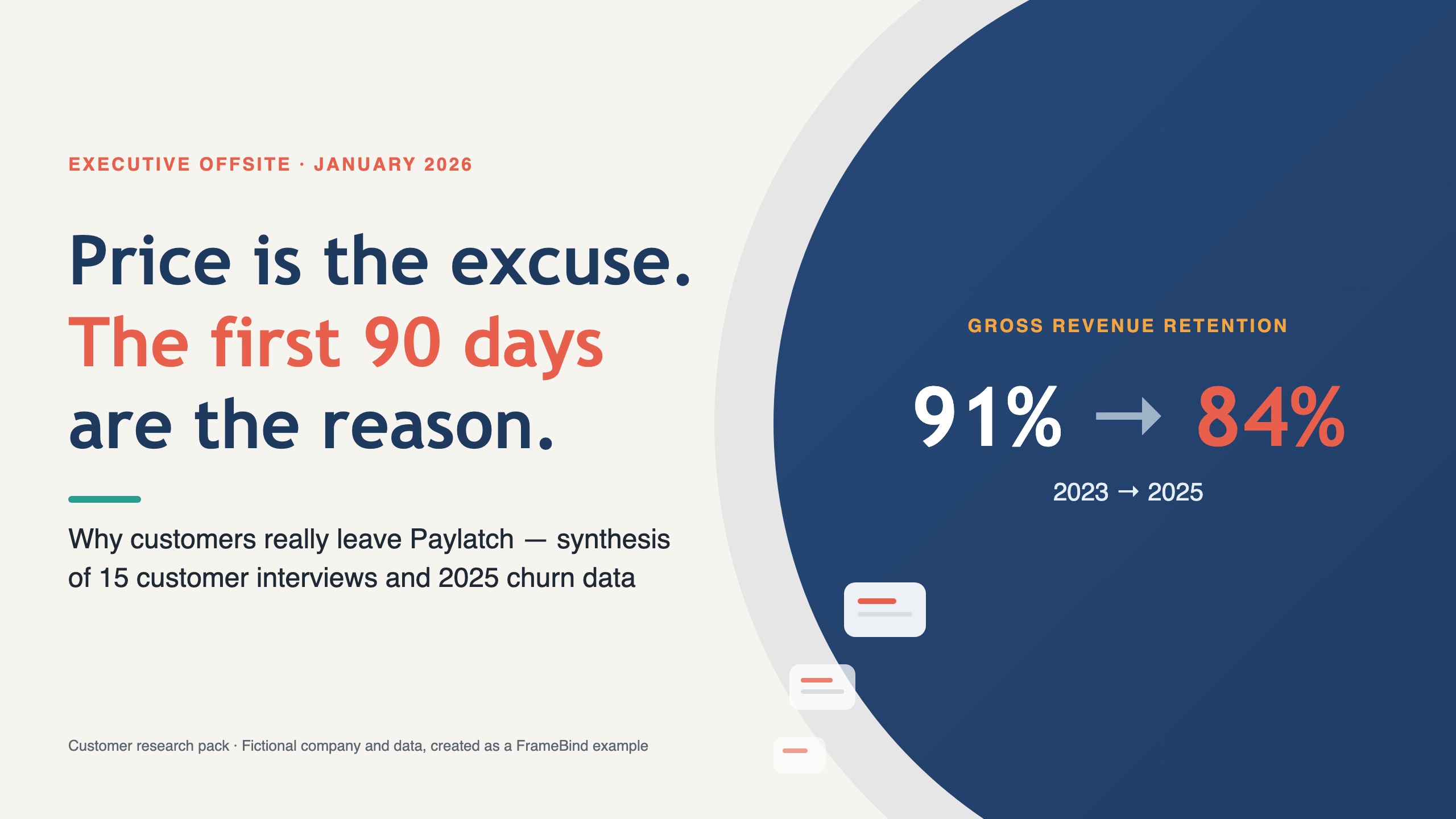
A real example, exactly as it downloaded.
What went in
A fictional research file on Paylatch, an accounts-payable software company, written for this example: notes from 15 customer interviews (7 churned, 4 at risk, 4 retained, each with role, sector, size and ERP) plus a year of churn and retention data. About 1,300 words and 3 tables.
- Source: 15 interview write-ups and churn data (Word)
- Audience: an executive offsite
- Output: 14 slides, 2 native charts, 2 tables
What came out
“Why Customers Leave Paylatch”: 14 slides in an original design (Soft rounded direction), with 2 native charts and 2 native tables you can edit in PowerPoint. Nothing was touched up after export. Click a slide to page through it, or open the file yourself.
Download the .pptx125 KBThe storyline, slide by slide.
Every headline in the deck, in order. This is the outline you approve before anything is built.
- 01Why customers really leave Paylatch: synthesis of 15 customer interviews and 2025 churn data
- 02The answer up front: what drives churn, and what we should do
- 03Retention has slipped seven points in two years
- 04Small and mid-sized customers are bleeding fastest
- 05The CRM says “price”, but that's the label, not the cause
- 06In their own words
- 07Four real drivers, decided long before renewal
- 08Driver 1: customers who reach value in 90 days stay
- 09Driver 2: when the integration breaks, the product breaks
- 10Left alone after go-live, then billed more
- 11Our retained customers prove the fix already works
- 12Prioritising the fixes by impact and effort
- 13The 90-day plan
- 14Win the first 90 days and renewal takes care of itself
You approve the plan. Then you get the file.
Send the notes.
Interview write-ups, survey results and the retention numbers, in one PDF or Word file up to 50 MB. Say who the synthesis is for.
Approve the storyline.
See the drivers it found and every slide headline before anything is built. If a theme is missing or a quote belongs elsewhere, say so in plain words.
Finish it in PowerPoint.
Quotes sit in text boxes, the retention numbers in real charts and tables. Swap a quote or update a number like you would in any deck.
What you still do
A synthesis is only as good as the notes behind it. FrameBind groups and weighs what you send; check that each driver and quote reflects what your customers actually said.
Questions.
More in the main FAQ, or email contact@framebind.com.
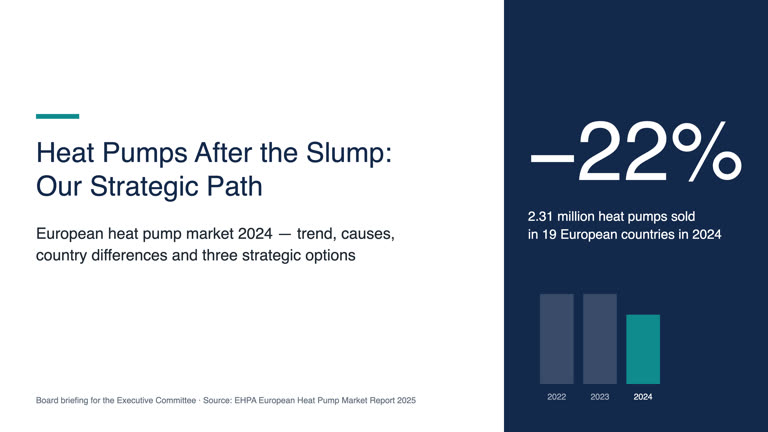
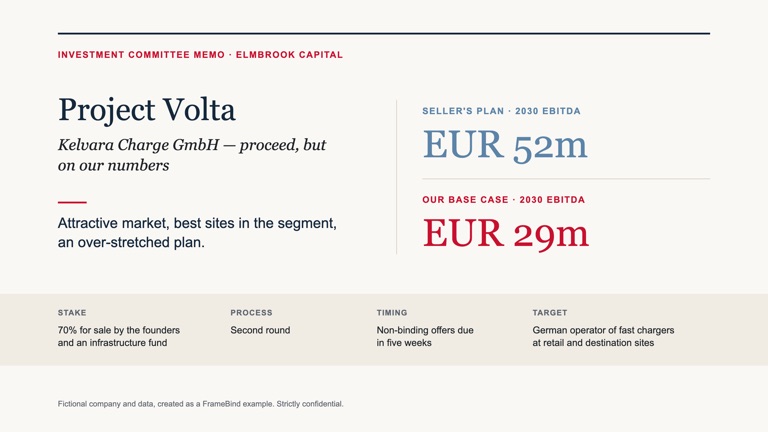
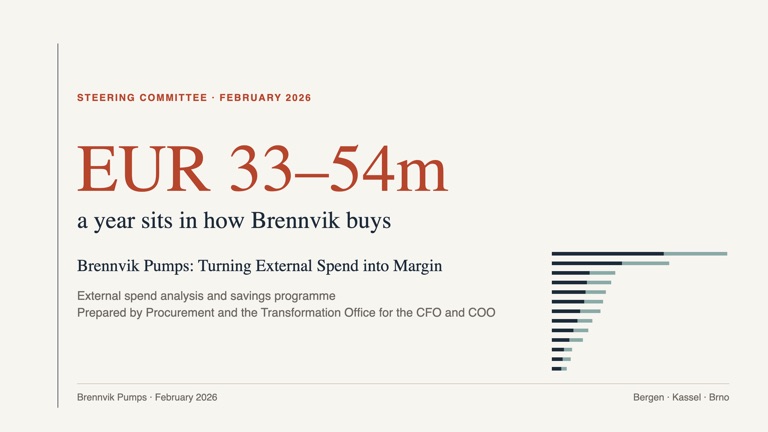
Send the material behind your next deck.
Plans from $149 a month, or try one deck for $49. A deck that fails goes back to your allowance automatically.